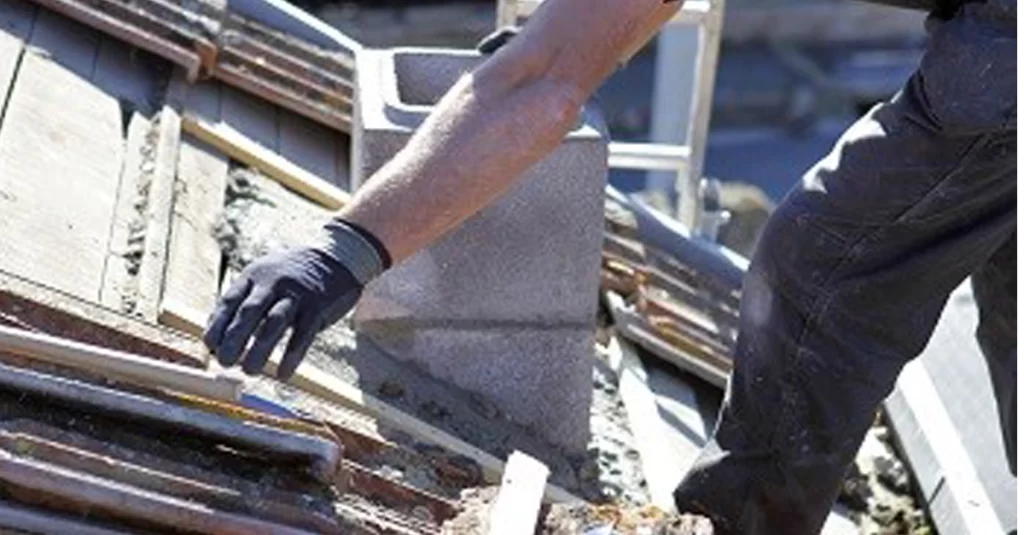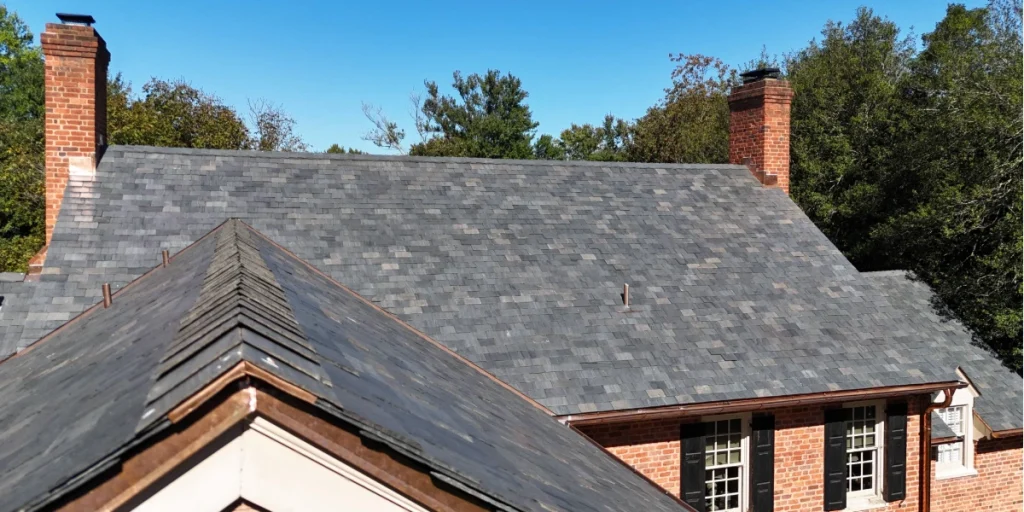
When a slate roof starts showing signs of trouble, knowing where to look first can save you time and money. At Stevens Roofing, we have been working with historic and residential slate roofs across Virginia since 1946, and one of the most common mistakes homeowners make is assuming the worst when the problem may be isolated to one component. Slate roofing is well known for its durability. But, like any system, it has parts that wear at different rates. Understanding whether the issue lies with the tiles themselves, the flashing, or the nails helps you ask the right questions and make smarter decisions before a repair crew ever sets foot on your roof.
What Makes Slate Roofs Different From Other Roofing Systems
Slate roofs are not maintained or repaired the same way as asphalt shingle roofs are. They are built to last a century or more when properly cared for, but that longevity depends on each component holding up over time. Virginia’s mix of humidity, freeze-thaw cycles, and aging housing stock creates conditions that affect tiles, flashing, and fasteners in distinct ways. A thorough slate roof inspection by a qualified contractor is often the first step toward understanding what you are actually dealing with. Skipping that step and guessing at a solution can turn a minor fix into a costly replacement project.
The Three Most Common Sources of Slate Roof Problems
Most slate roof issues trace back to one of three areas. Getting familiar with each one puts you in a better position to evaluate repair quotes and understand what the work actually involves.
Cracked or Broken Slate Tiles
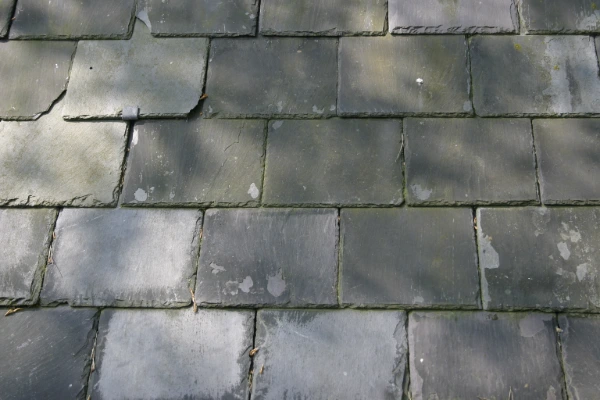
Individual slate tiles can crack from impact, age-related delamination, or foot traffic during prior roof work. The good news is that a cracked or broken tile does not always mean the entire roof needs attention. In many cases, a skilled roofer can remove the damaged tile using a slate ripper and replace it with a matching piece. The challenge in Virginia, particularly on historic properties, is sourcing slate that matches the original in color, thickness, and texture. Buckingham slate, quarried in Virginia, is one of the most respected materials in the industry and is often used for repairs on older homes in the region.
What Is Buckingham Slate and Why Does It Matter?
Buckingham slate comes from Buckingham County, Virginia, and is known for its blue-gray color and exceptional durability. It has been used on buildings throughout the Mid-Atlantic for well over a century. When repairing a historic slate roof, using the right slate matters both aesthetically and structurally. Mismatched tiles can affect the roof’s appearance and may not perform the same way under the same conditions. A roofing contractor with experience in historic roof restoration will know how to source and match the appropriate material for your specific roof.
Flashing Failures
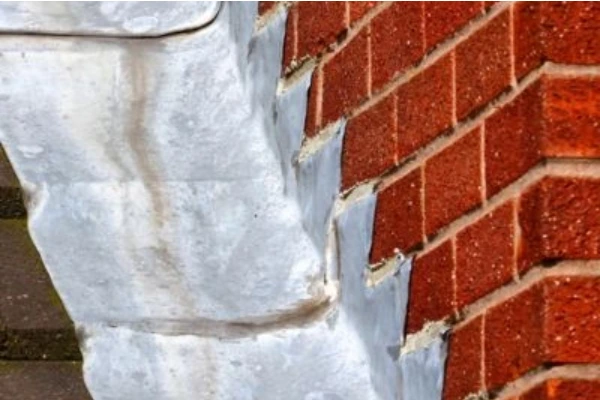
Flashing is the metal material installed at joints, valleys, and transitions on your roof, such as where the roof meets a wall, dormer, or chimney. It is one of the most vulnerable parts of any roofing system and a common source of leaks. On slate roofs, flashing is often made of copper or lead-coated copper because these materials are flexible enough to move with the roof and durable enough to last decades. When flashing corrodes, separates, or was improperly installed in a previous repair, water finds a path inside. Many historic roof leak repairs turn out to be flashing problems rather than tile problems.
How to Tell If Flashing Is the Culprit
If your leak appears near a chimney, skylight, or roof valley rather than in an open field of slate, flashing is likely the issue. Water stains on interior ceilings that track toward a wall or vertical surface are another indicator. A roof inspection will confirm whether the flashing has failed and whether it can be resealed or needs full replacement. Copper flashing, when properly installed, can last for many decades and may last as long as some slate roofs, so getting the repair done correctly the first time is worth the investment.
Nail Fatigue and Slipped Tiles
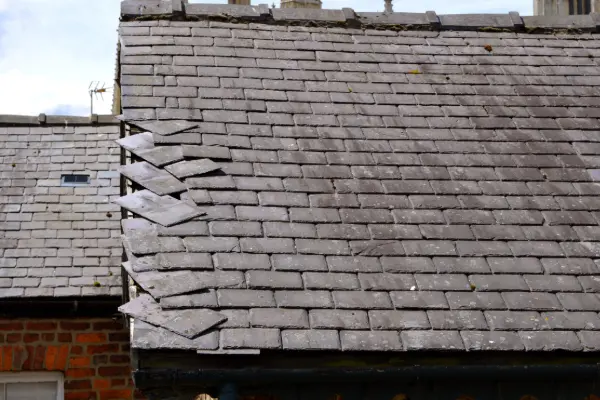
On quality installations, every slate tile is held in place by nails, typically copper or stainless steel. Over time, nails can corrode, fatigue, or pull through the tile, causing individual pieces to slip out of position. A slipped tile is a hazard because it exposes the underlayment beneath and can dislodge other tiles when it slides. This is sometimes called “nail sickness” in the roofing trade. It is one of the more common issues on roofs that are several decades old and often affects multiple tiles at once. Replacing the affected tiles and using new copper nails is the standard fix.
Can Slate Roofs Be Repaired Rather Than Replaced?
In most cases, yes. A slate roof with isolated damage, whether from broken tiles, nail fatigue, or flashing failure, is a strong candidate for targeted repairs rather than full roof replacement. The key question is how widespread the damage is. When damage becomes widespread across the roof, replacement may be the more practical path. But for roofs that are structurally sound with localized issues, repair is almost always worth pursuing. Slate is a premium material, and replacing a functioning roof prematurely means losing decades of remaining service life.
How Much Does Slate Roof Repair Cost in Virginia?
The cost of slate roof repair varies based on the scope of work, the type of slate, the pitch of your roof, and accessibility. Minor repairs involving a handful of tiles may run a few hundred dollars. Larger jobs involving flashing replacement, multiple tile sections, or work on steep historic roofs can run into the thousands. Getting a detailed inspection and written estimate from a qualified roofing contractor is the most reliable way to determine the cost of your specific repair. Avoid estimates that are given without a physical inspection, as slate roof pricing is highly specific to the condition and configuration of each individual roof.
How Long Does Slate Roof Repair Take?
Depending on the scope of work and crew size, most targeted slate roof repairs can be completed in 1 to 2 days. Flashing replacements around complex features, such as chimneys, may take longer. Weather is also a factor, particularly in Virginia, where spring and fall schedules fill quickly. Working with a contractor who specializes in slate ensures the job is done efficiently and without unnecessary disruption to the roof’s existing structure.
How to Find a Slate Roof Repair Specialist in Virginia
Not every roofing contractor has experience with slate. It is a specialty material that requires specific tools, techniques, and sourcing knowledge. When evaluating contractors, ask how many slate roofs they have repaired, whether they have experience with historic properties, and how they source replacement tiles. Request references and look at photos of completed work. A contractor who works regularly with slate will be able to speak confidently about material options, flashing choices, and what to expect from the repair process.
Talk to Stevens Roofing About Your Slate Roof
If you are seeing signs of damage on your slate roof or have noticed a leak that is difficult to trace, the team at Stevens Roofing is ready to help. We serve homeowners across Norfolk, Virginia Beach, Chesapeake, Portsmouth, Newport News, Richmond, Williamsburg, and the Eastern Shore of Virginia. Contact Stevens Roofing today to schedule a roof inspection and get an accurate picture of what your roof needs.