Choosing roofing options for historic homes takes more care than picking a roof for a new build. At Stevens Roofing, we have worked on Virginia roofs since 1946, and three generations of our family have learned how older homes were built and how to keep them sound. A roof on a historic house protects the structure, but it also carries much of the home’s character. Its shape, material, color, and small trim details all tell part of the story.
Homeowners in Richmond, Norfolk, Williamsburg, and across coastal Virginia tend to ask the same questions. Which historic roofing materials still make sense today? Should an old slate roof be repaired or replaced? Does the city need to approve the work first? Good answers start with knowing what makes historic roofs different and what your options really are.
What Makes East Coast Historic Roof Design Different
Virginia has some of the oldest homes in the country, including landmarks like Bacon’s Castle and the John Marshall House in Richmond. Builders here worked with what the land and the coast gave them, and their roofs had to stand up to salty air, high humidity, and strong tropical storms.
That is why three roof types show up again and again on East Coast historic homes: slate, metal (copper above all), and cedar shingles or shakes. Each one lasts a long time when cared for, and each one ages in a way that adds charm. When a historic roof needs work, matching the original design keeps the house looking the way it was meant to.
Roof Pitches on Historic Homes Compared With Modern Houses
Most historic homes have steep roofs, and there were good reasons for it. A steep pitch sheds rain quickly, so water has less chance of pooling and seeping in. It keeps leaves and debris from piling up. It also creates room upstairs for storage or extra living space.
Over the last 150 years or so, lower pitches have become common on houses. Flat and low-slope roofs were once used mostly on commercial and industrial buildings. They are easier to reach and repair, but they drain more slowly.
Pitch matters when you pick materials. Heavy materials like slate and tile were made for steep roofs. Changing the pitch, or using a material that doesn’t suit it, can hurt both performance and historical accuracy.
Architectural Details and How They Shape a Home’s Character
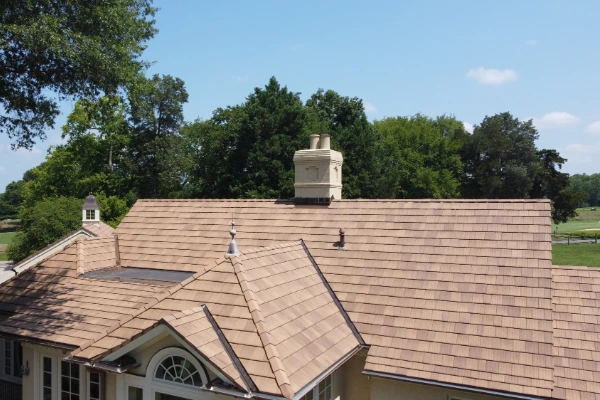
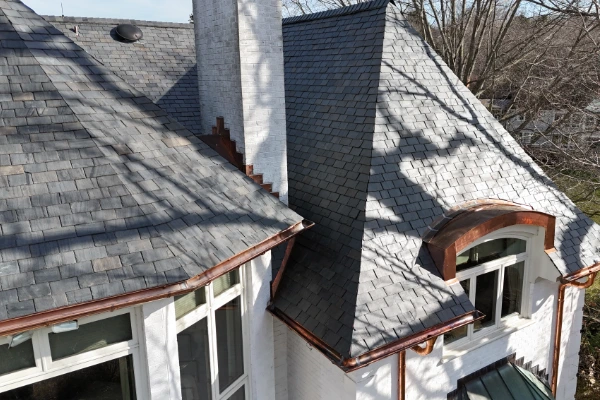
Much of a historic home’s charm comes from the details that sit on its roof. Dormers, those small windowed structures that project from the roof, break up the roofline and bring light and usable space to the upper floor. Roof lanterns, the older name for skylights, did the same job in many early homes. Chimneys once carried smoke from wood and coal fires, and today they still anchor the look of the roof.
Small touches matter too. A decorative copper chimney cap, copper flashing around a dormer, or a carefully cut slate pattern can set a house apart. When a roof is repaired or replaced, these details should be kept, restored, or rebuilt to match.
Common Historic Roof Colors in Virginia
The color of a historic roof should reflect the era when the home was built. On older Virginia and Southern homes, the most common roof colors were shades of blue and blue-gray, red, and green.
Much of that palette came from slate, which appears in red, green, blue-gray, and even purple. Slate was imported in the 1700s, until better transportation in the 1900s made American slate easier to produce and ship. Wood shakes added gray, red, and brown tones, and Southern builders often split them from cypress and oak.
Some original colors can still be matched today. Others can only be matched closely. Before you choose, check with your local historic review board for any color or material limits.
Historic Roof Vents and How Attic Ventilation Has Changed
Older homes moved air through the attic with simple, passive vents. Cupolas sat on the roof above an opening, letting warm air rise out. Gable vents on the attic end walls allowed hot, damp air to escape. Later came box vents near the ridge, wind turbines that spin without power, and long ridge vents that run along the peak.
Good ventilation keeps attics cooler in summer and helps prevent moisture and ice dams in winter. The good news is that ventilation can often be improved without changing the home’s look. A skilled roofer can tuck a low-profile ridge vent under matching ridge material or restore an original cupola so it works again.
Roofing Materials for Historic Homes
The best roofing options for historic homes usually start with what was already on the house. Matching the original material preserves the home’s character and is often what a historic review board expects to see. It also makes sense from a building standpoint, since the roof frame, pitch, and flashing were designed around that material.
When the original material is no longer practical, a close match in look, texture, and color is the next best choice. The five historic roofing materials that follow are the ones we work with most on older Virginia homes. Each has its own strengths, care needs, and price range, so the right pick depends on your home’s age, style, and condition
Slate
Slate is the classic choice for historic homes in Virginia. It is natural stone, so it resists fire, mold, and rot. A well-kept slate roof often lasts more than 100 years, and some last 150 to 200 years. It comes in red, green, blue-gray, and purple. Slate is heavy and requires a specialist who knows how to remove and set tiles without damaging nearby pieces.
Ornamental Copper
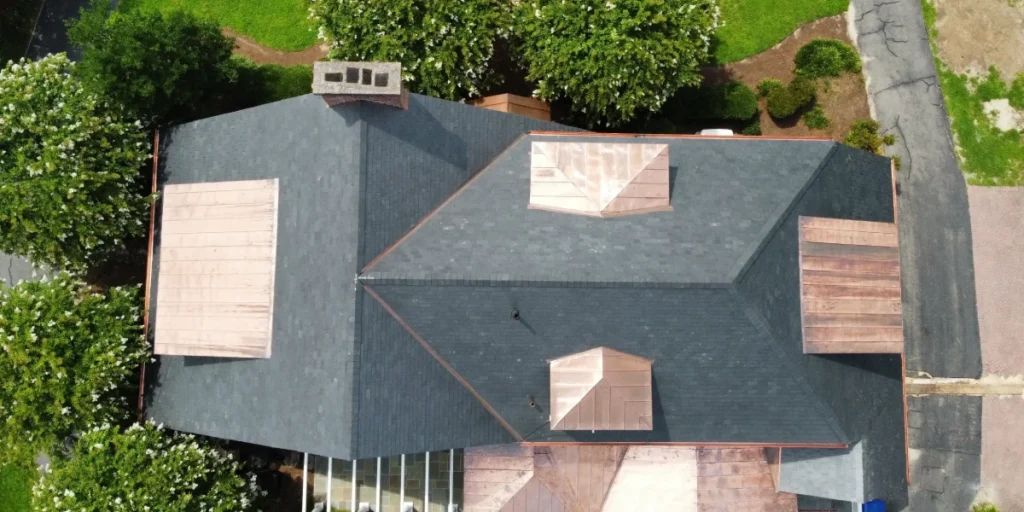
Copper has graced historic roofs for centuries. It contains no iron, so it won’t rust, which makes it a strong fit for salty coastal air. Over time, it turns from bright reddish-brown to a soft green patina. Copper is used for full roofs, bay windows, cupolas, dormers, chimney caps, and flashing. Styles like standing-seam copper and flat-seam copper each suit different roof shapes.
Tile
Clay tile roofs appear on some historic homes, often those built in Mediterranean or Spanish revival styles. Tile is durable, holds its color, and resists fire. Like slate, it is heavy and best suited to steep roofs with framing built to carry the load. Broken tiles can often be replaced one at a time, which keeps the rest of the original roof in place.
Wood Shake
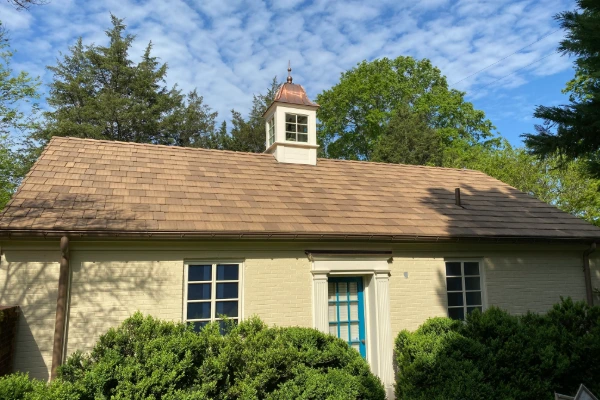
Wood shakes and shingles were among the most common roofing materials in the 18th and 19th centuries. Southern builders used cypress and oak, and cedar is popular today. Wood offers a warm, natural look that fades to soft gray over time. Shakes treated with preservatives resist mold, which matters in Virginia’s humid climate. Wood needs more upkeep than slate or copper.
Metal
Yes, a metal roof can be used on a historic home. Many older Virginia homes, farmhouses, and porches had metal roofs from the start. Standing-seam metal roofs offer a clean look that suits many historic styles and holds up well. The key is choosing a profile, finish, and color that match the home’s era. In a historic district, check with the review board before you switch materials.
Historic Roof Restoration vs. Replacement
Historic roof restoration keeps as much of the original roof as possible. Crews repair or replace damaged pieces, renew flashing, fix vents and trim, and save the original material wherever it is still sound. Restoration protects the home’s history and often costs less than starting over.
Historic roof replacement involves removing the old roof and installing a new one. When done right, the new roof uses the same or closely matched materials and copies the original details. Replacement makes sense when most of the material has failed, the decking has rotted, or past repairs have done more harm than good. Before you decide, learn what to know about replacing a historic roof and get a hands-on inspection.
Should a Historic Slate Roof Be Repaired or Replaced?
Most historic slate roofs should be repaired first. Slate often outlasts the nails and flashing that hold it in place, so a roof that looks worn may only need new fasteners, flashing, or a few tiles. Roof replacement makes more sense when many slate tiles are flaking (delamination), or the roof has widespread damage. A slate specialist can tell the difference.
Historic Roofing in Richmond: What the Commission of Architectural Review Means for Your Roof
If your home sits in one of Richmond’s Old and Historic Districts, your roof project will likely go through the Commission of Architectural Review (CAR). The City Council created CAR in 1957. It is the city’s official historic preservation body, and it reviews exterior changes to buildings in these districts. When a project is approved, CAR issues a Certificate of Appropriateness.
Roof repairs and replacement are among the most common items that come before the Commission. Named districts include Monument Avenue, Church Hill North, Jackson Ward, Shockoe Valley, and Chimborazo Park. Homes outside Richmond may answer to a different local board, so homeowners in other cities should confirm the rules with their own historic review office before work begins.
Do I Need Approval to Replace the Roof on a Historic Home in Richmond?
In most cases, yes. Roof replacement inside a Richmond historic district requires a building permit. Visible roof work, especially a change in material, generally needs a Certificate of Appropriateness. Swapping an original material for something different can lead to a denial, so plan your material choice with the review in mind. Some smaller jobs, such as certain porch roof replacements, can be approved by CAR staff without a full Commission hearing.
How Long Does the CAR Approval Process Take?
The Certificate of Appropriateness process usually takes 30 to 60 days. Build that time into your schedule, and apply well before you hope to start. A roofer who has worked in Richmond’s historic districts can help you gather photos, material details, and drawings for the application.
Which Parts of a Historic Richmond Roof Require Review?
Visibility is the main test. Sloped roof surfaces that are visible and their original features are what the Commission cares about most. Flat and non-visible portions of a roof do not require review. If you aren’t sure which parts of your roof are visible, ask CAR staff before you apply.
How to Choose a Qualified Roofer for Historic Homes
Many roofing companies will say they can fix any roof, but few have the training and tools to work on historic roofing materials. Slate, for example, takes special tools like a slate ripper, slate cutter, and chicken ladder, plus years of hands-on practice. A roofer without that skill can crack nearby tiles, cause leaks, or use materials that don’t belong on an older home.
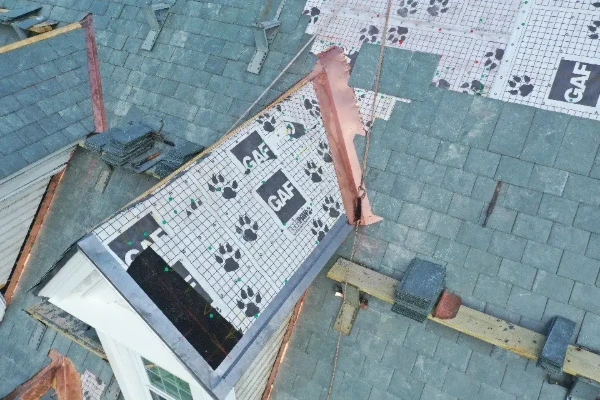
Safety matters too. Slate gets slippery when wet and can grow moss, so walking on it is risky for anyone without training. A historic roofing contractor knows how to protect both the crew and the roof. Look for a company with a long track record on older homes, photos of past historic projects, and experience with local review boards.
Questions to Ask a Historic Roofing Contractor
- How many historic roofs have you restored, and can I see examples?
- Do you work with slate, copper, tile, and wood shake?
- Will you repair original materials before suggesting replacement?
- How do you match missing or damaged pieces?
- Have you worked through Richmond’s CAR process or other local reviews?
- Do you offer financing for larger projects?
Frequently Asked Questions About Historic Roofing
Protect Your Home’s History With the Right Roof
A historic roof is worth protecting, and the right choices today can keep it sound for generations. Since 1946, our family has helped Virginia homeowners repair, restore, and replace roofs on older homes using slate, copper, metal, tile, and wood shake roofing. We serve Richmond, Norfolk, Williamsburg, Virginia Beach, Chesapeake, Portsmouth, Newport News, and the Eastern Shore.
Whether you need a slate repair, a full historic roof replacement, or help planning for a Richmond CAR review, our team is ready to talk through your options. Contact Stevens Roofing today to schedule an inspection and estimate.