Caring for your home starts with knowing what your roof needs, and every material has its own repair challenges. At Stevens Roofing, we’ve been helping Virginia homeowners maintain their roofs since 1946, and we’ve learned that each roofing material requires a unique approach to repairs.
Whether your roof is made of classic asphalt shingles or a specialty material such as slate or copper, understanding how repairs typically unfold gives you the insight you need to care for your home with confidence. Different roofing materials develop distinct types of damage over time, and the repair methods vary significantly based on the material’s composition and installation requirements.
Understanding Asphalt Shingle Repair
Asphalt shingles are still one of the most popular roofing materials in Virginia, but they’re susceptible to specific types of damage. Wind can lift or tear individual shingles, while UV exposure causes the granules that protect the underlying asphalt to deteriorate over time. Hail can also remove granules. Poor installation is another top cause of shingle failure. The most common cause of leaks in asphalt shingle roofs is damaged or missing shingles, particularly around roof penetrations like chimneys and vents.

Repairing asphalt shingles usually means taking out the worn or broken pieces and installing new shingles that blend with the rest of your roof. The process requires careful attention to the sealing and nailing pattern to prevent future wind damage. Most asphalt shingle roofs last 20-30 years, and timely repairs can help you reach the upper end of that range by preventing water damage to the underlying structure.
Metal Roofing Repair Considerations

Metal roofing systems offer exceptional durability, but they’re not immune to damage. The most common issues include loose fasteners, damaged seams, and scratches that compromise the protective coating. For standing seam metal roofs, problems often develop at the seams themselves or at roof-to-wall transitions where the metal flashing may separate.
Repairing metal roofs requires specialized knowledge of metalworking techniques and proper fastening methods. Simple repairs might involve resealing seams or replacing individual panels, while more extensive damage may require panel replacement. Metal roofing is known for its long service life—often several decades—so addressing issues as they arise is typically a smart way to keep that longevity working in your favor. The repair cost for metal roofing tends to be higher than that of asphalt due to the specialized materials and knowledge required.
Slate Roofing Repair Expertise
Slate represents one of the longest-lasting roofing materials available, with lifespans often exceeding 100 years, depending on the quality of the slate. However, individual slate tiles can crack from impact damage or deteriorate at nail holes due to moisture infiltration. The most common cause of leaks in slate roofs is broken or slipped tiles and failing flashing around chimneys and valleys. Repairing slate roofs requires exceptional skill, as walking on slate without proper techniques can cause further damage.

The repair process involves carefully removing broken slates and installing new ones using traditional or modern hook methods that don’t require nailing through the new slate. Given slate’s remarkable longevity, repairs are almost always worthwhile unless the underlying roof deck has deteriorated. Slate repair costs are typically higher than those of other materials due to the material cost and the specialized expertise required.
Tile Roofing Repair Methods

Clay and concrete tile roofs provide distinctive architectural appeal and excellent durability, lasting 50-100 years with proper maintenance. These roofs commonly develop cracks from impact damage or thermal expansion and contraction. Leaks most frequently occur at broken tiles or where underlayment has deteriorated beneath intact tiles.
Repairing tile roofs involves carefully removing and replacing damaged tiles, which requires knowledge of proper installation techniques to prevent breaking surrounding tiles. The underlayment beneath tile roofs often requires attention before the tiles themselves fail, as water can penetrate through the tile layer even when the tiles appear intact. Tile repair costs vary depending on whether tiles need replacement or if the underlayment requires work, but the long lifespan of tile roofing makes repairs a sound investment.
Wood Shake Roofing Repair
Wood shake roofing offers natural beauty but requires more maintenance than other materials. The most common types of damage include splitting, cupping, and rot caused by moisture exposure. Moss and lichen growth also accelerate the deterioration of wood shakes. Leaks typically develop where individual shakes have split or where water has penetrated between layers. Repairing wood shake involves removing damaged shakes and installing replacements that match the existing material’s thickness and exposure.
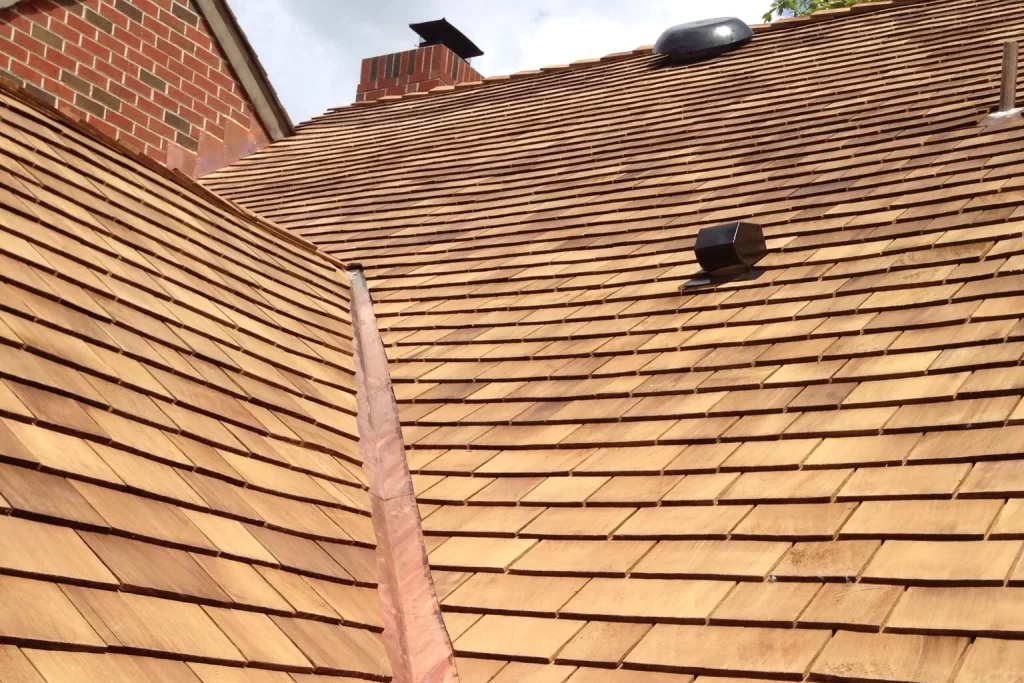
The repair process must account for proper ventilation and spacing to allow the wood to expand and contract naturally. Wood shake roofs typically last 20-40 years, and regular repairs help extend their lifespan by addressing damage before it spreads to surrounding materials and causes rot. Repair costs for wood shake are moderate but can increase if underlying damage requires attention.
Flat Roofing Repair Solutions

Flat roofs face unique challenges. Standing water is the most common cause of leaks, as these roofs rely on waterproof membranes rather than relying on water shedding by gravity. Damage typically appears as blisters, cracks, or punctures in the roofing membrane. Repairing flat roofs involves identifying the source of leaks, which isn’t always directly above the interior water damage, and patching or replacing damaged sections of the membrane.
The repair approach varies significantly based on the specific flat roofing system installed. Flat roofs generally last 10-30 years, depending on the material, and prompt repairs prevent water from saturating the insulation beneath the membrane. Flat roof repairs often come at a lower cost than work on pitched roofs because the surface is simpler to reach and move across.
Making Informed Repair Decisions
Understanding the specific repair needs of your roof type helps you respond appropriately when damage occurs. Consider the age of your roof when evaluating whether repairs are necessary—materials nearing the end of their expected lifespan may warrant replacement rather than repair. The extent of damage also matters; isolated damage typically justifies repair, while widespread problems may indicate systemic issues.
Working with experienced roofing professionals who understand your specific roofing material protects your investment and prevents improper repairs that could void warranties or cause additional damage. Regular inspections help identify minor issues before they become major problems, regardless of the type of roof you have.
If you’re concerned about damage to your roof or need expert guidance on the best repair approach for your roofing material, contact Stevens Roofing today.